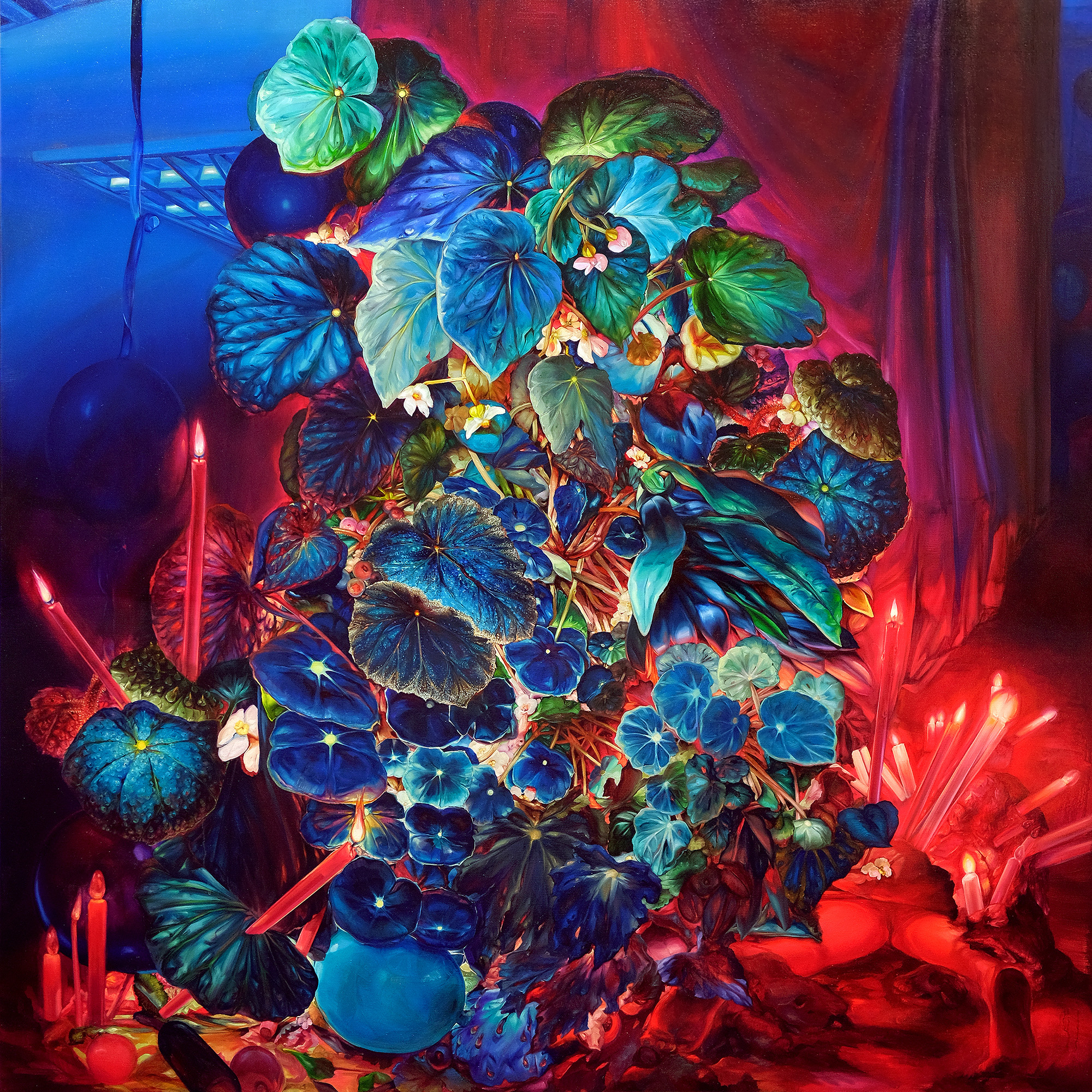
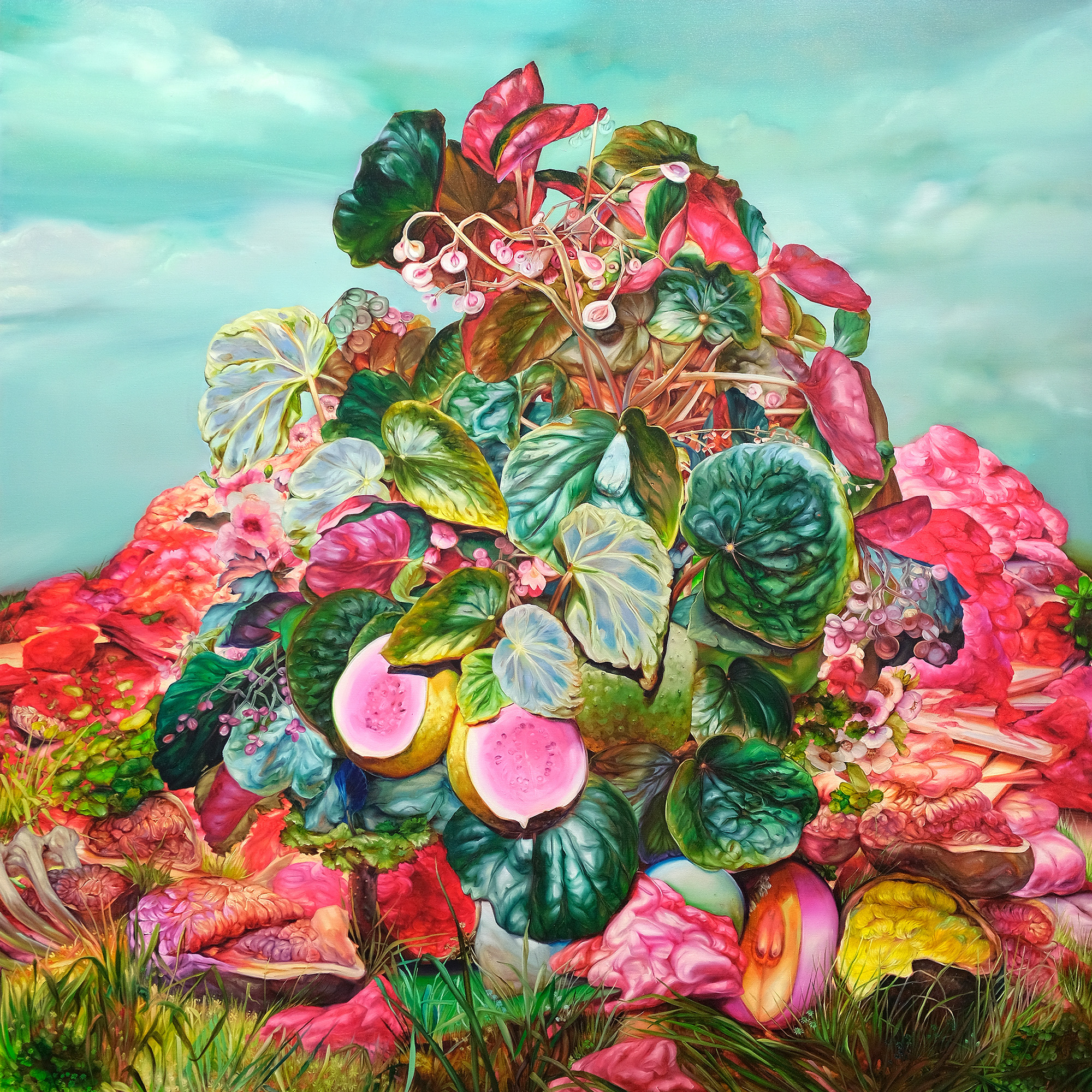
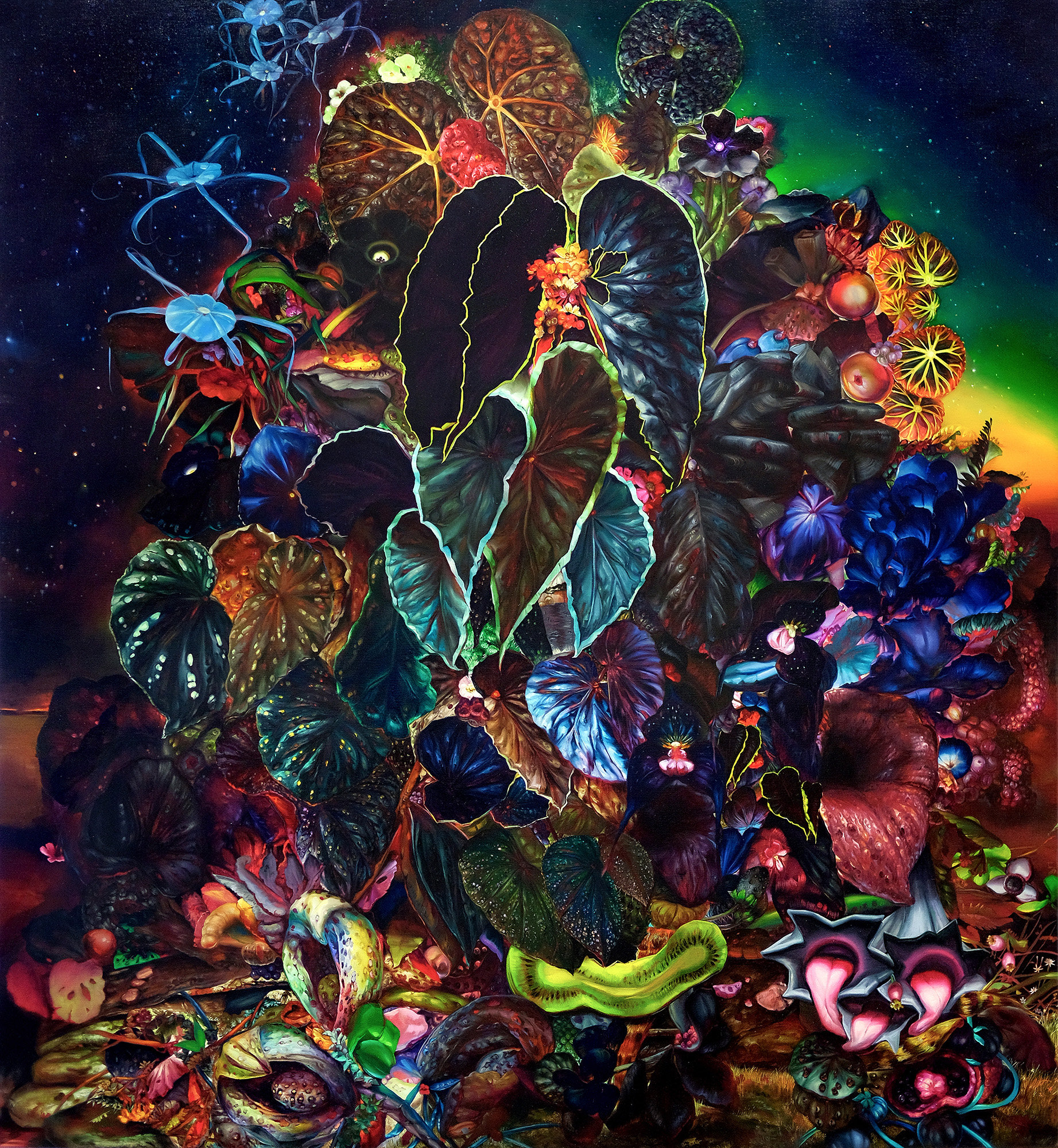
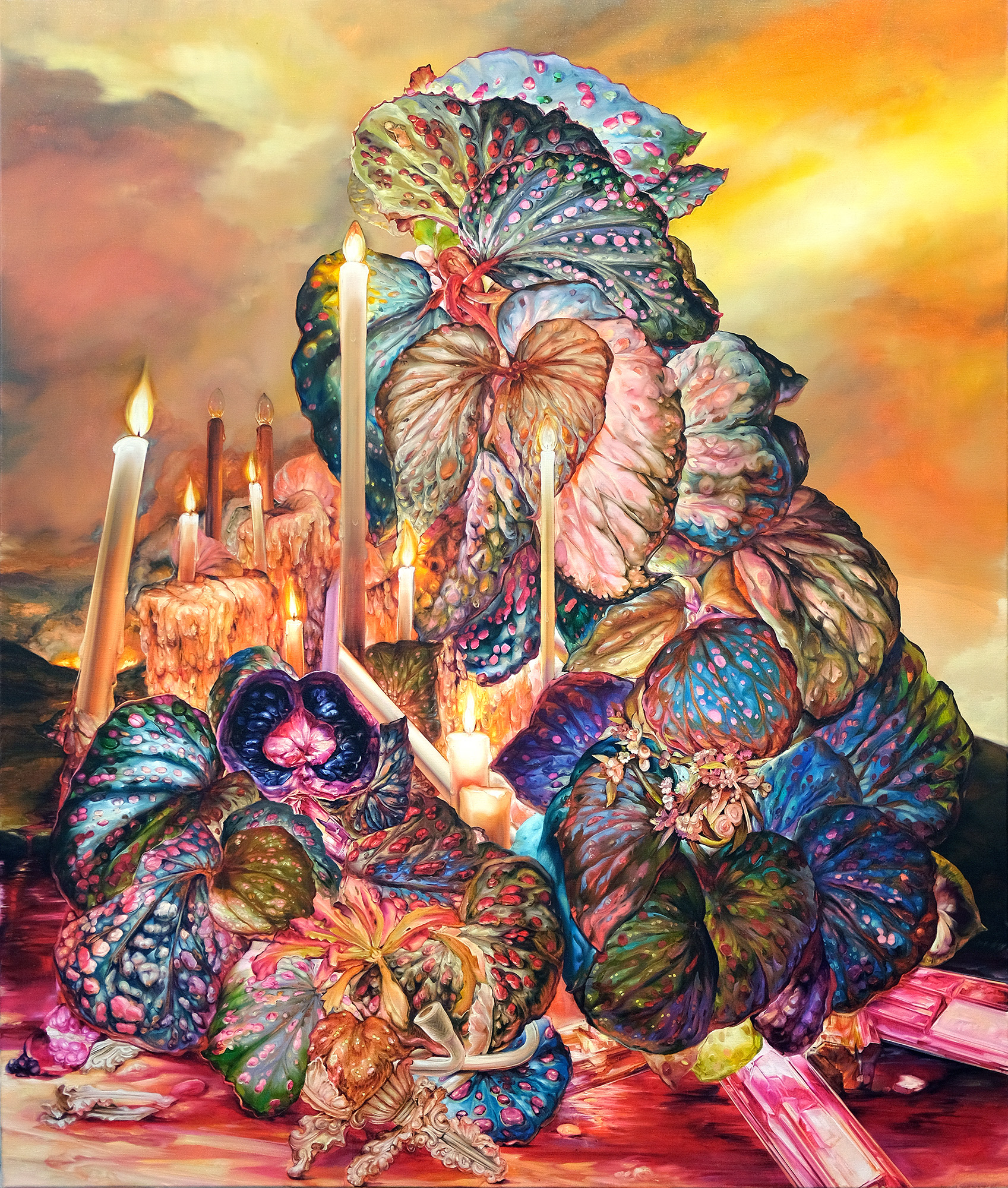
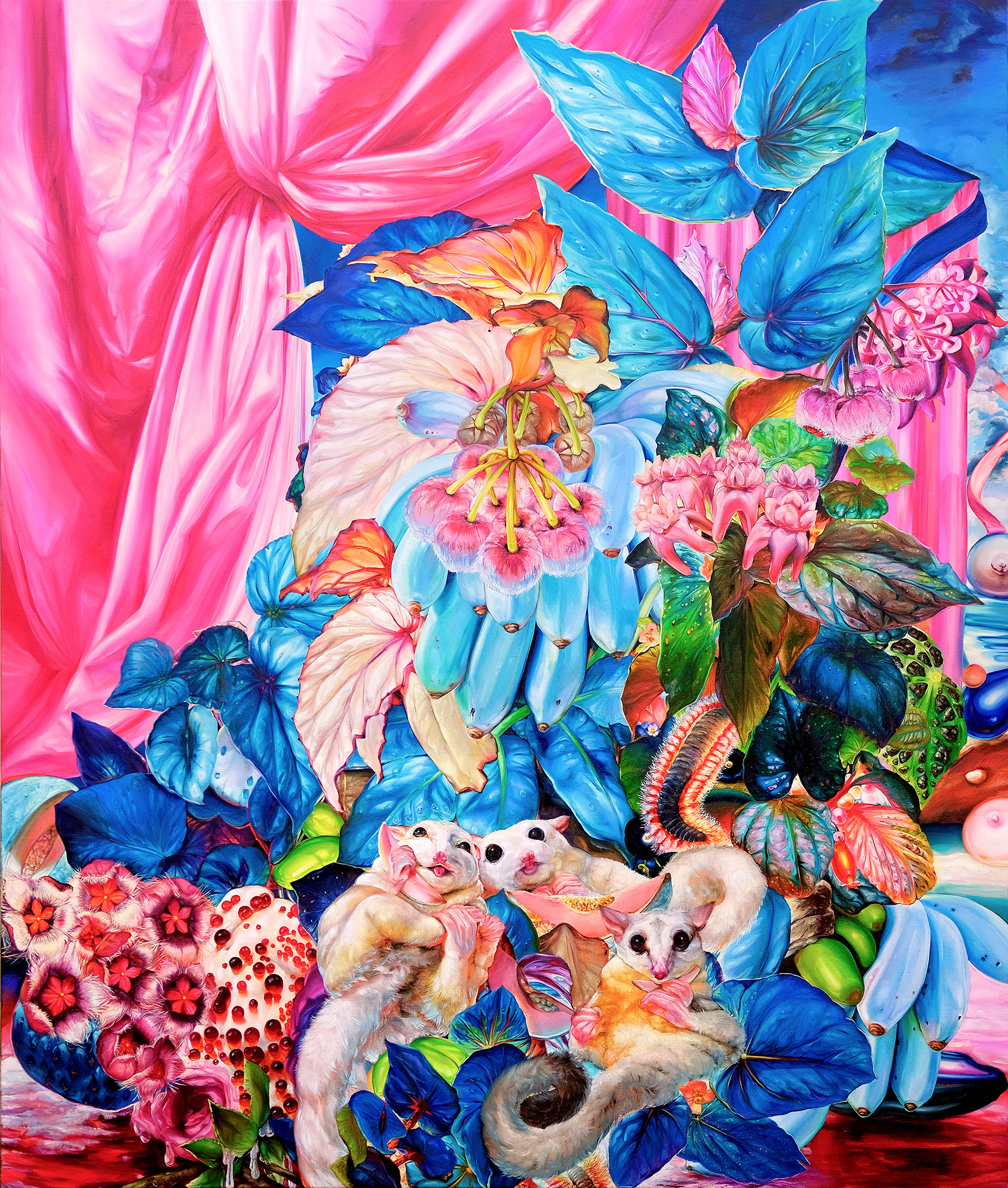
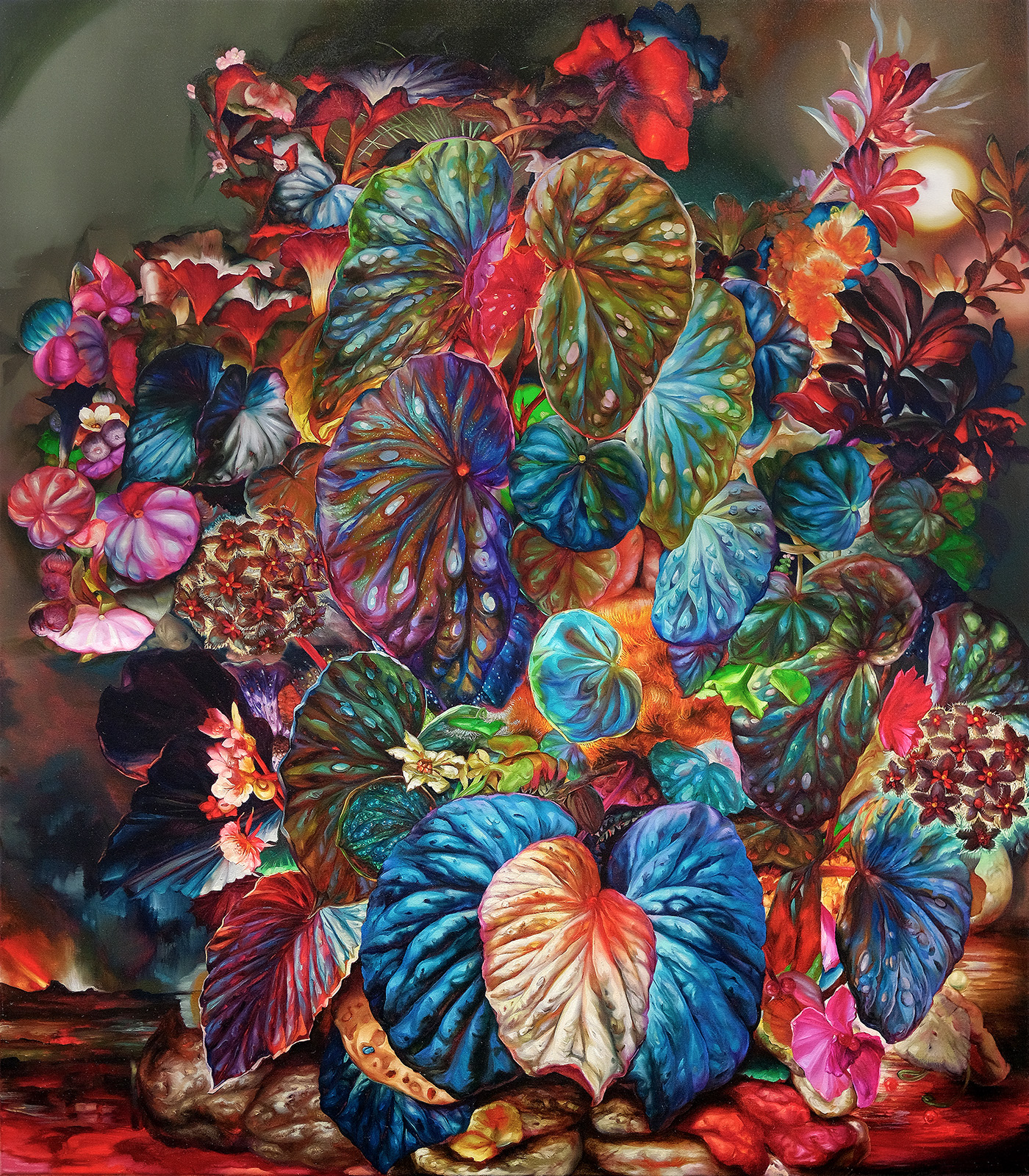
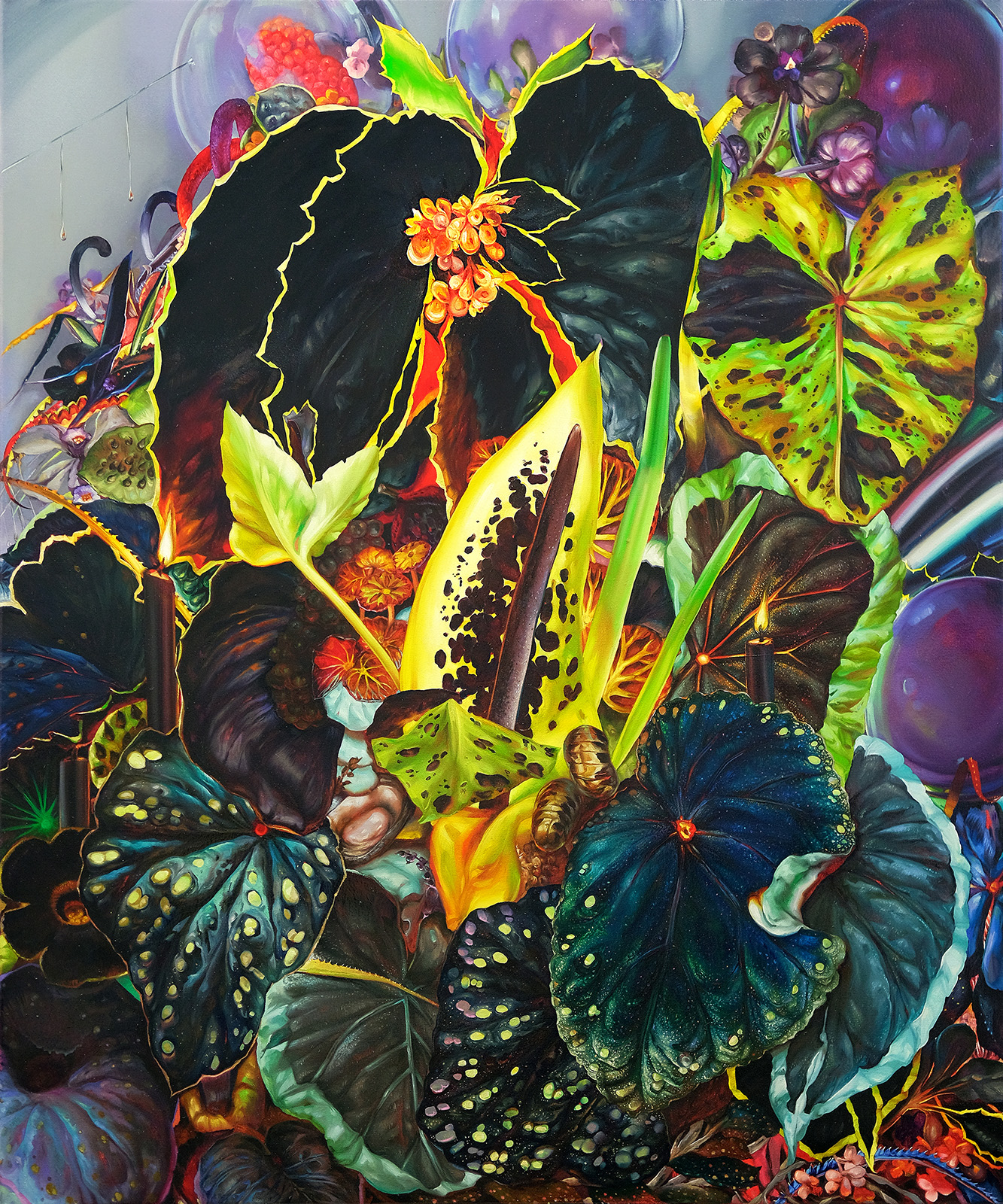
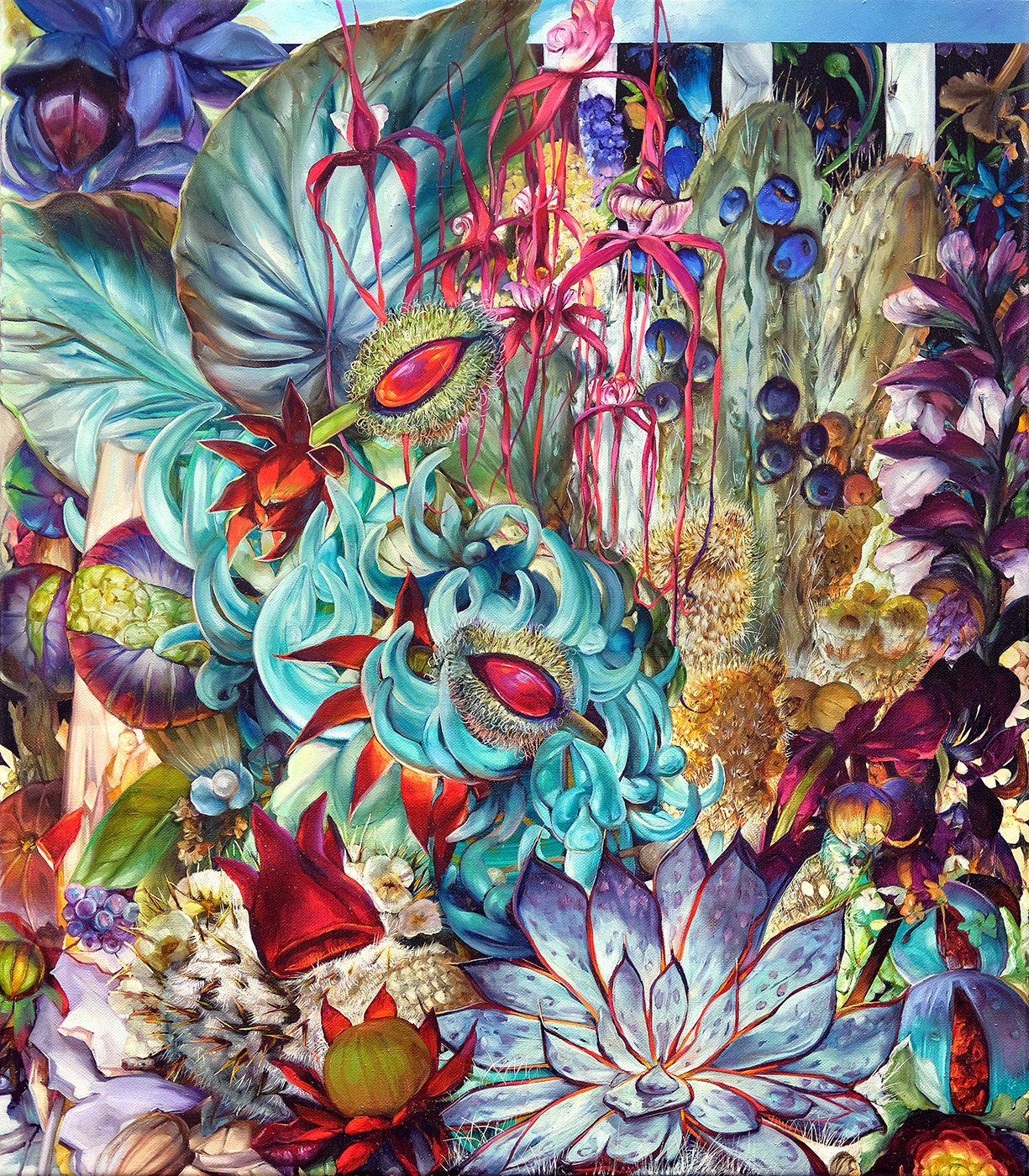
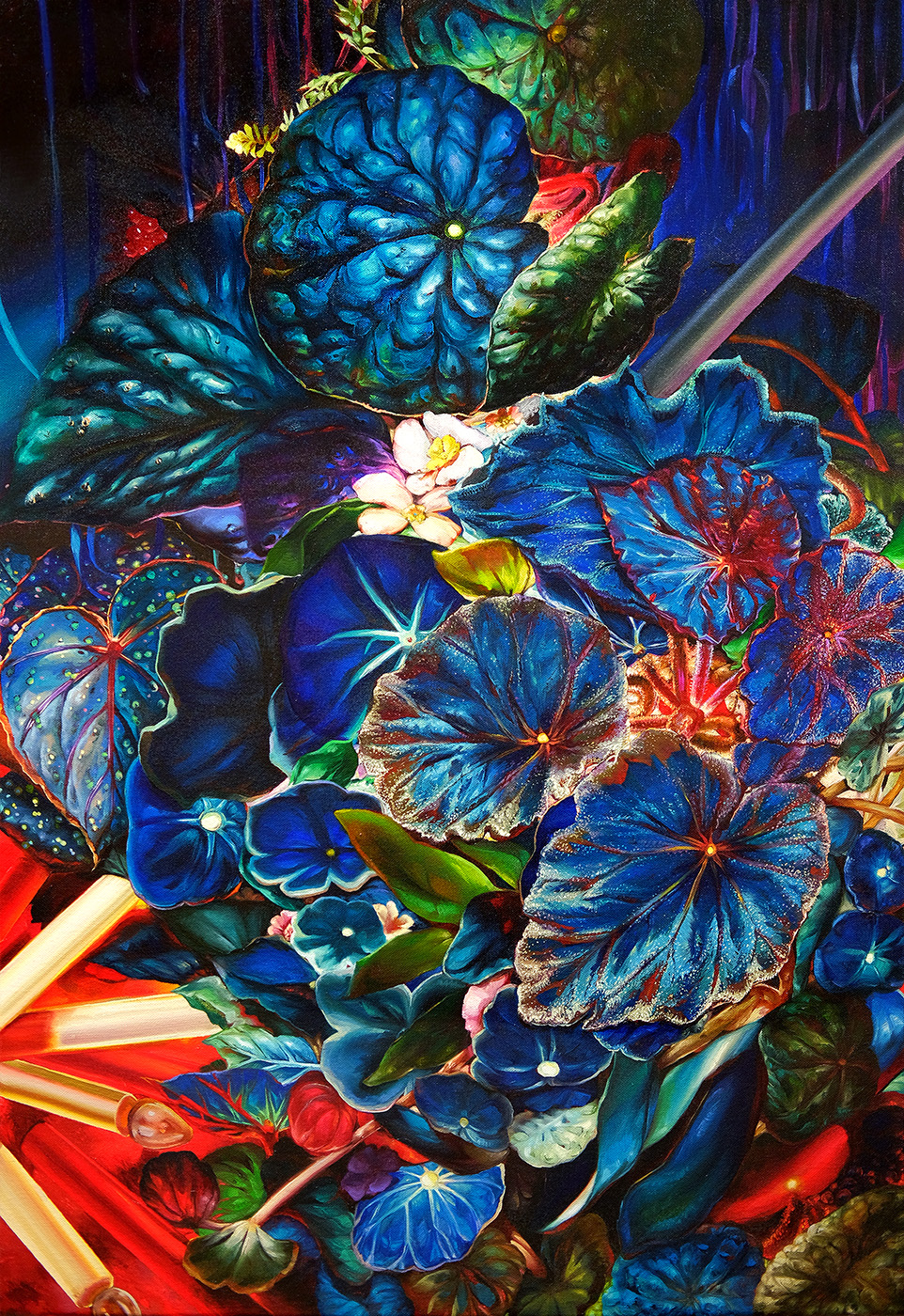
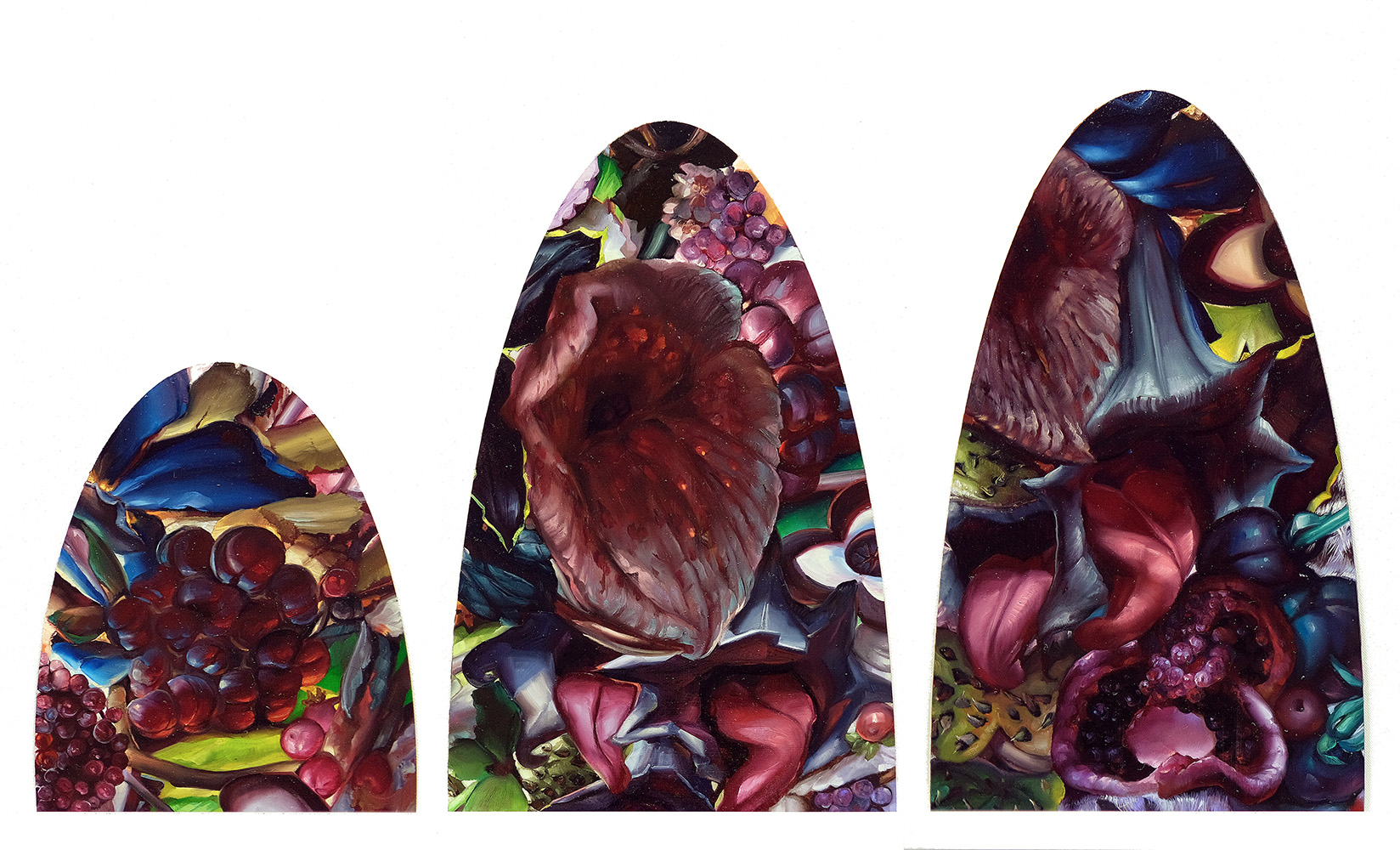
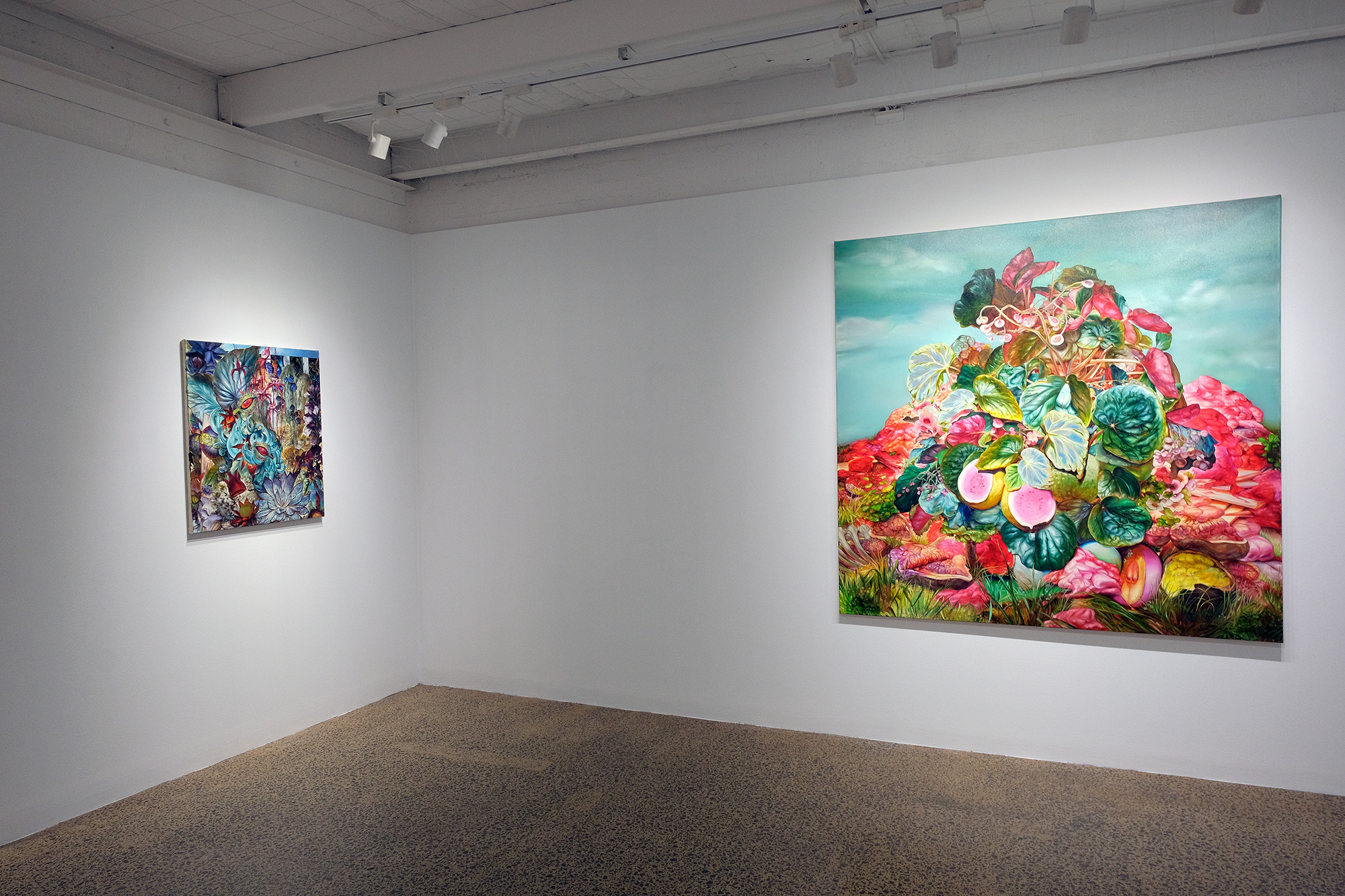
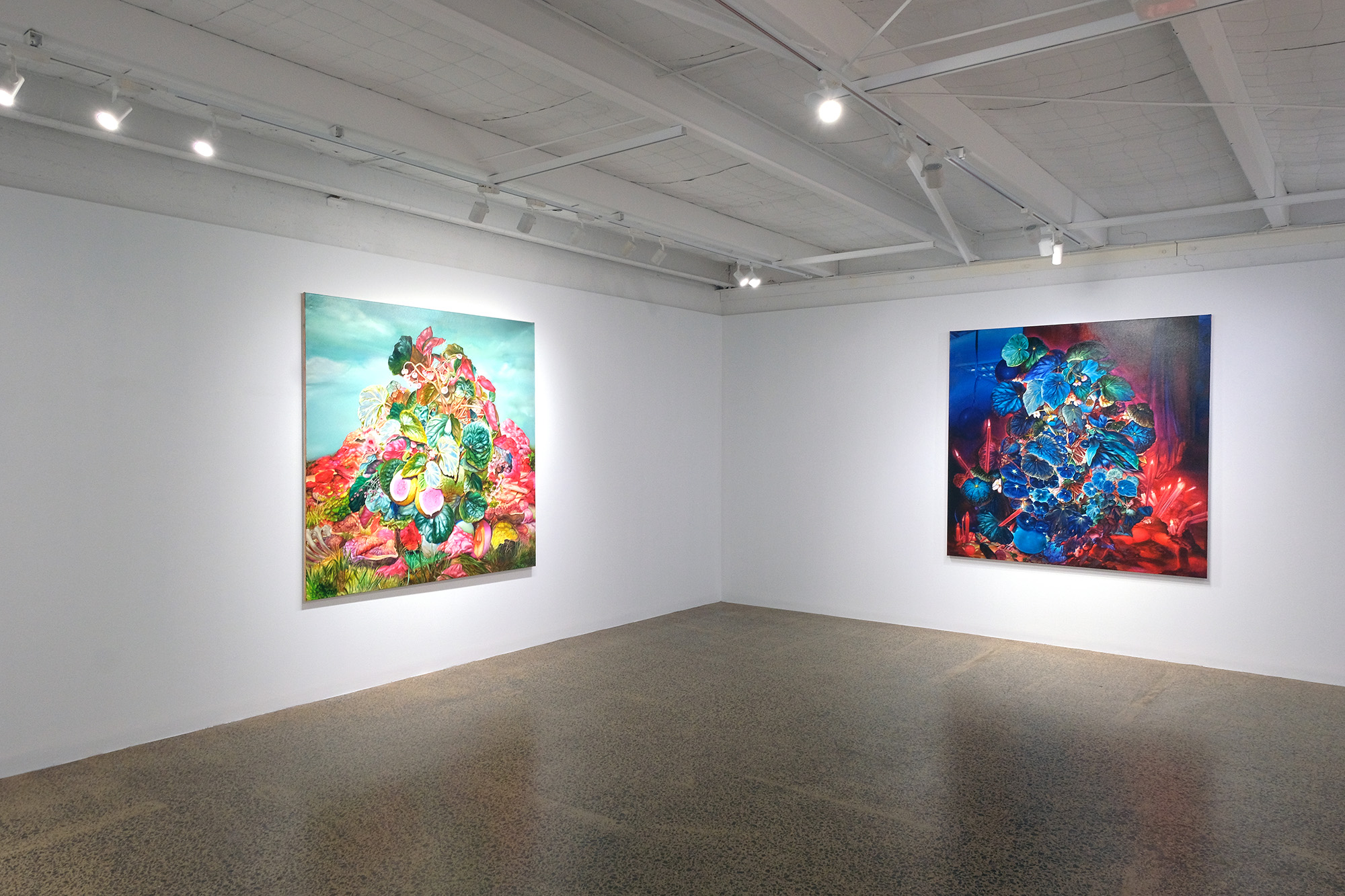
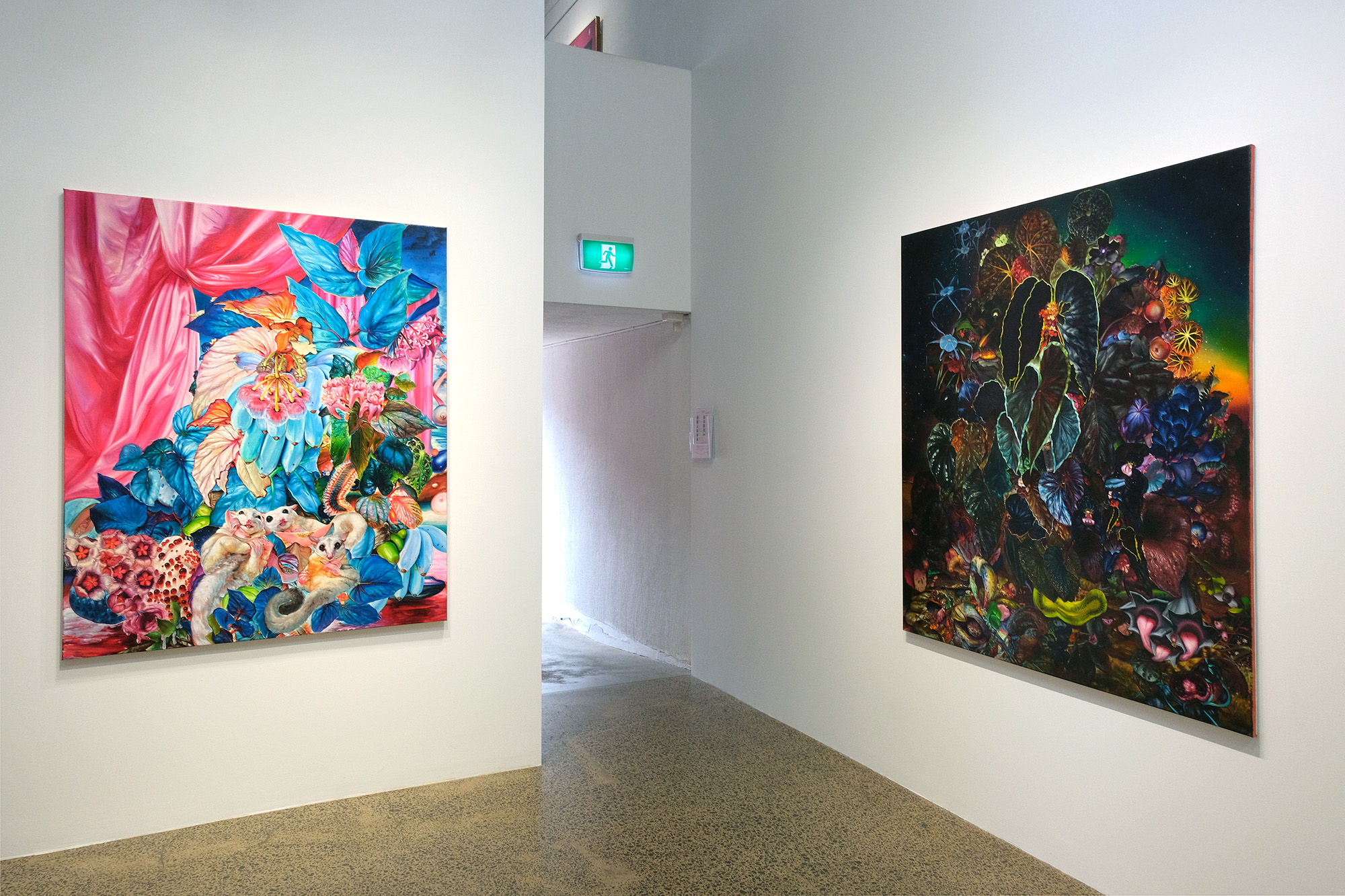
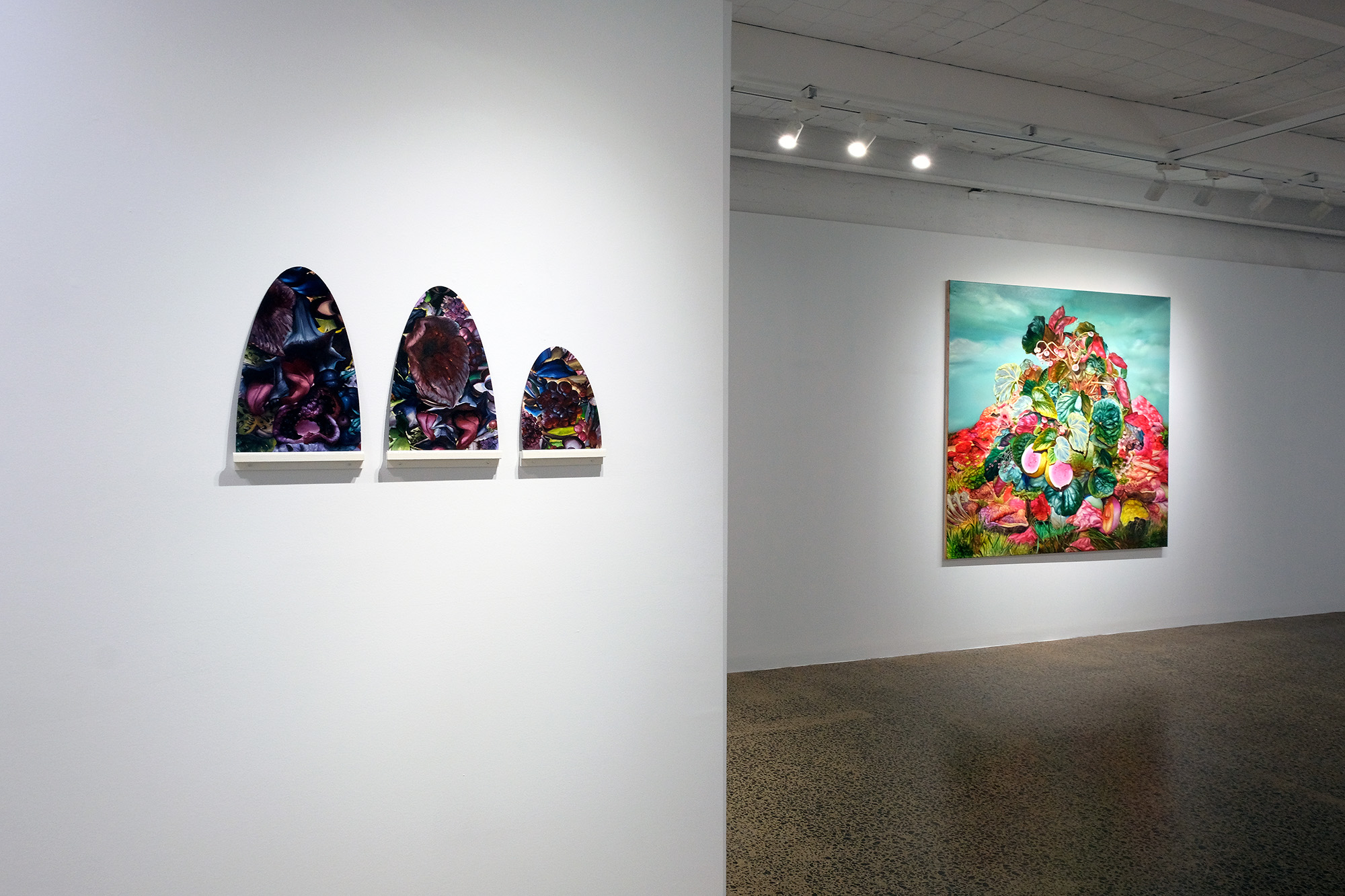
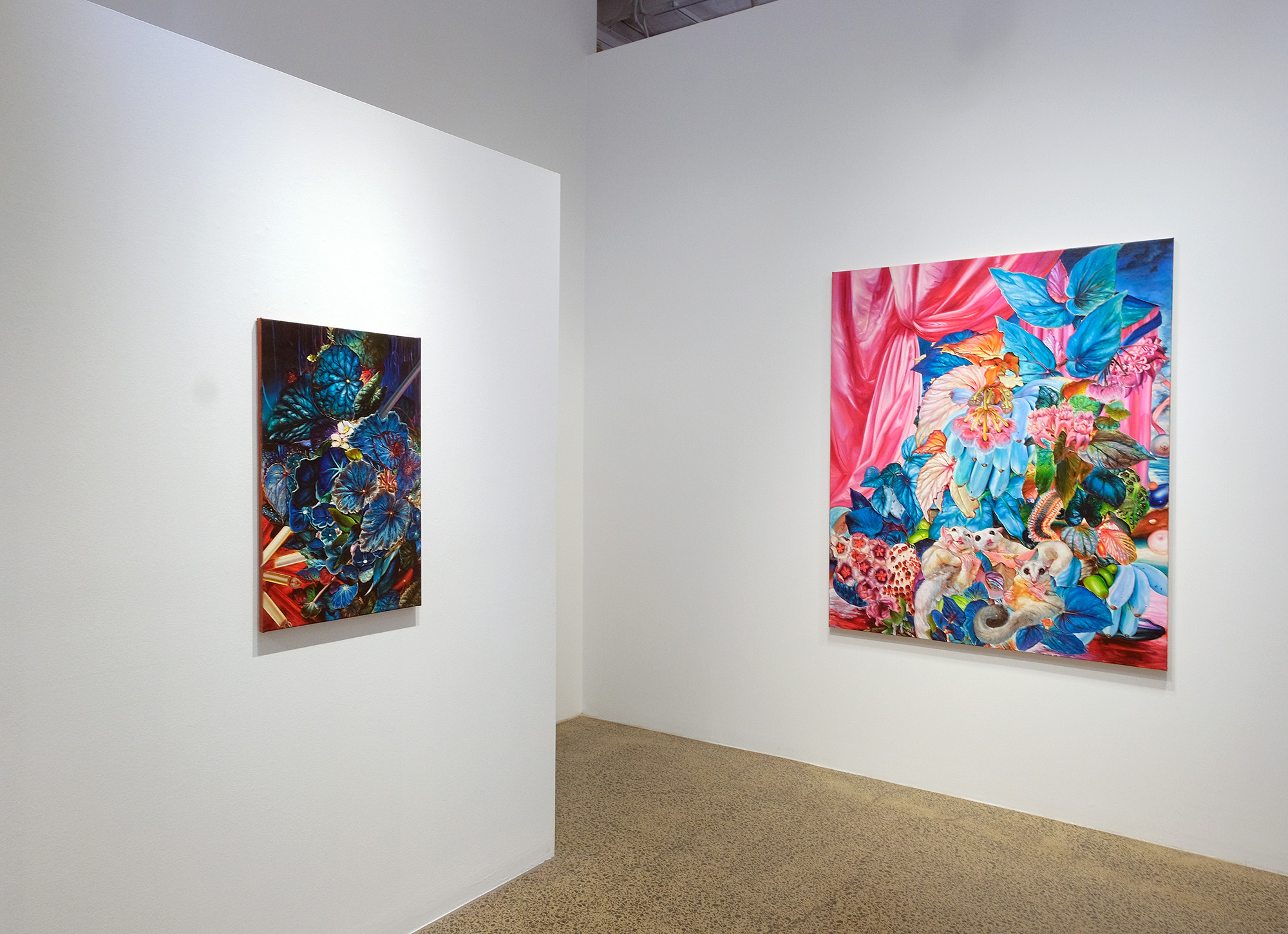
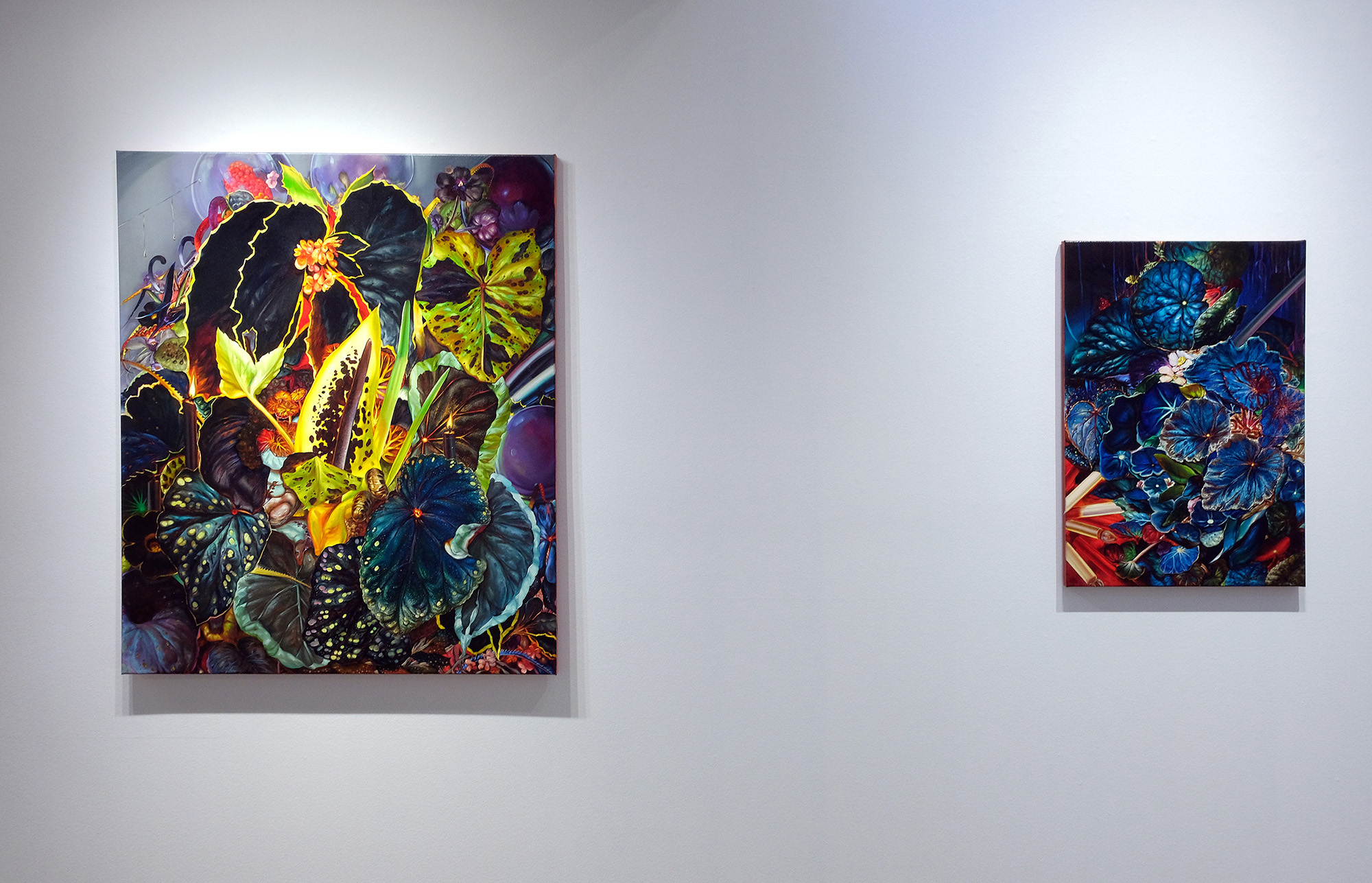
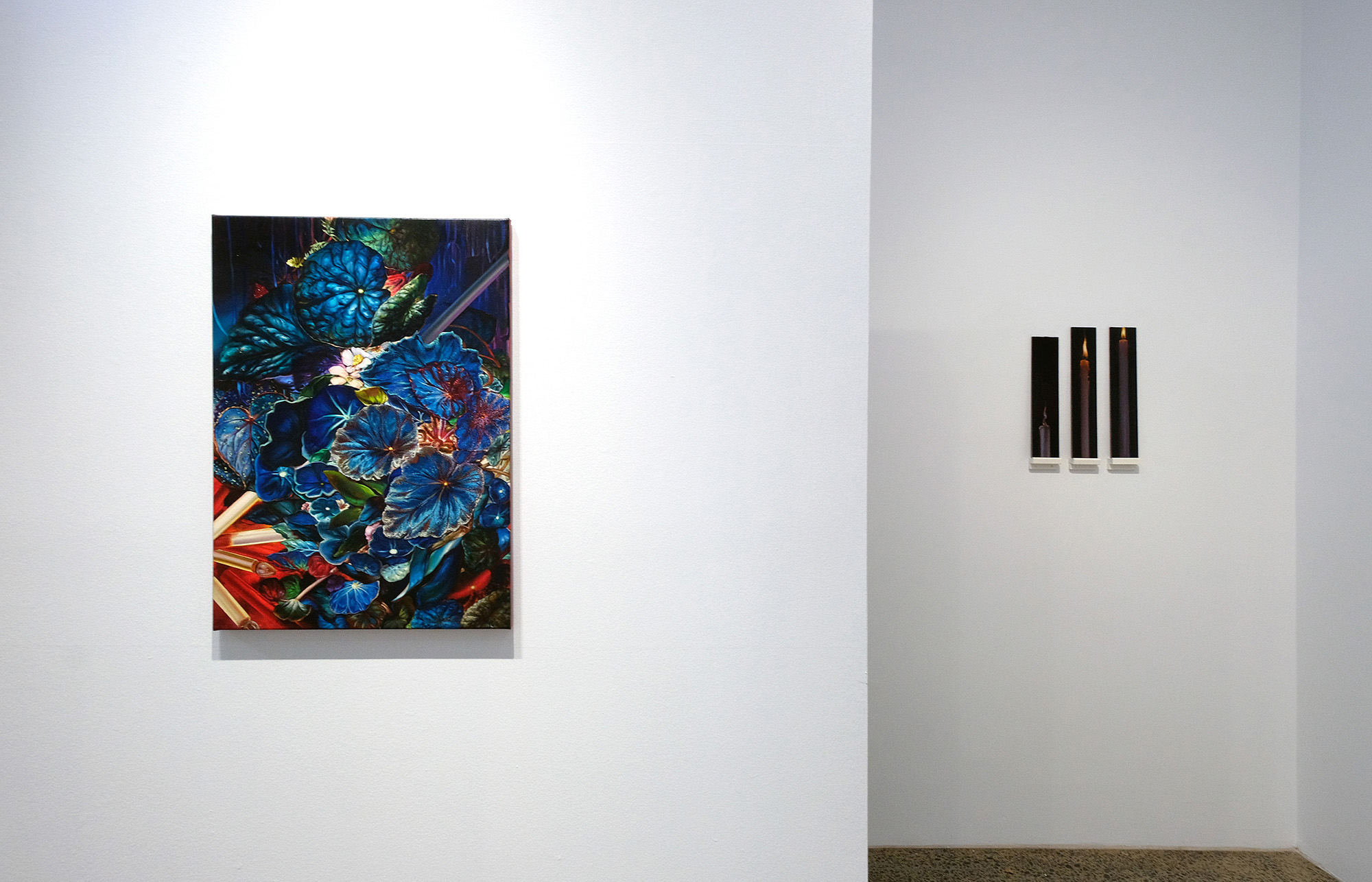
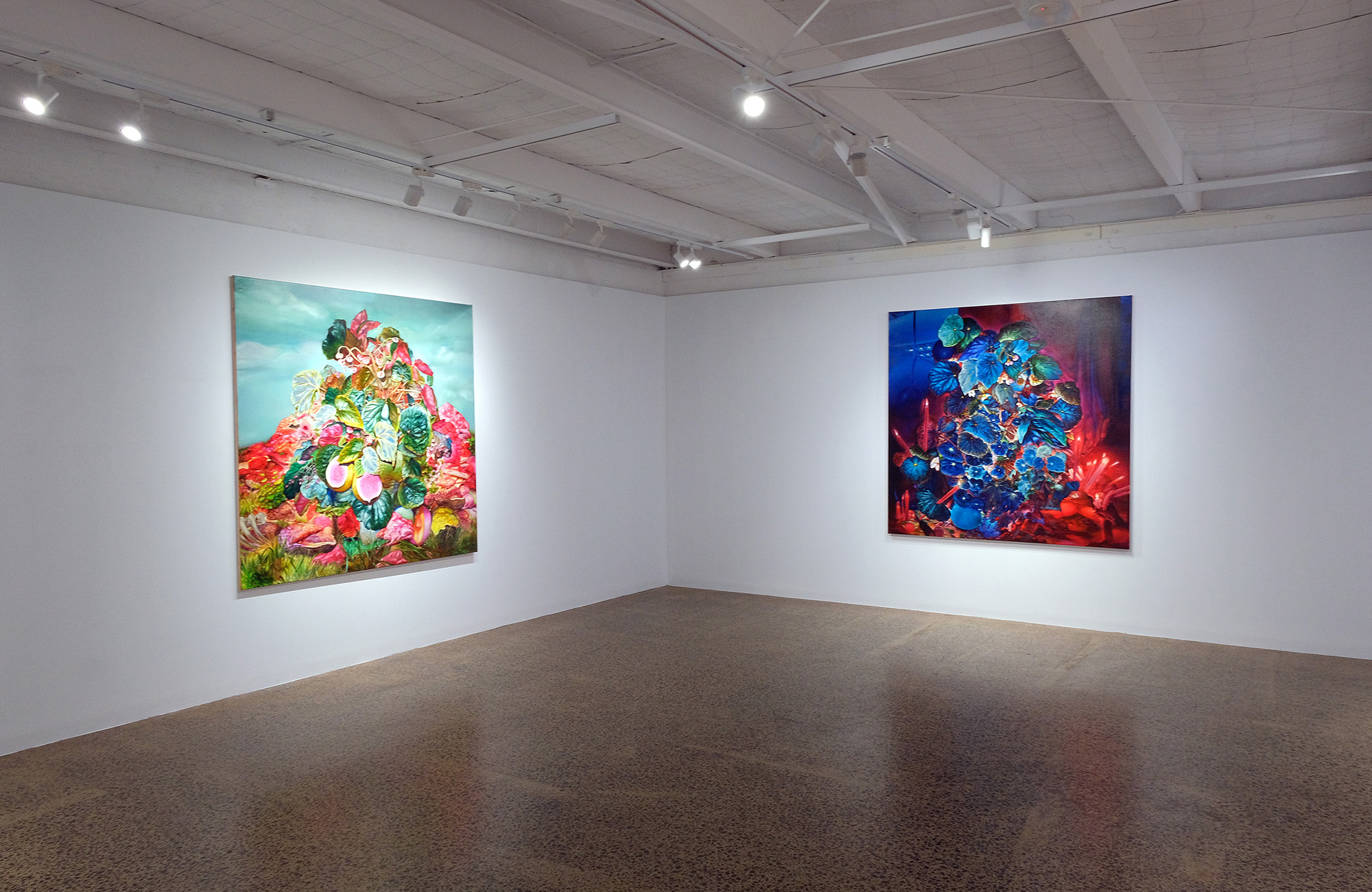
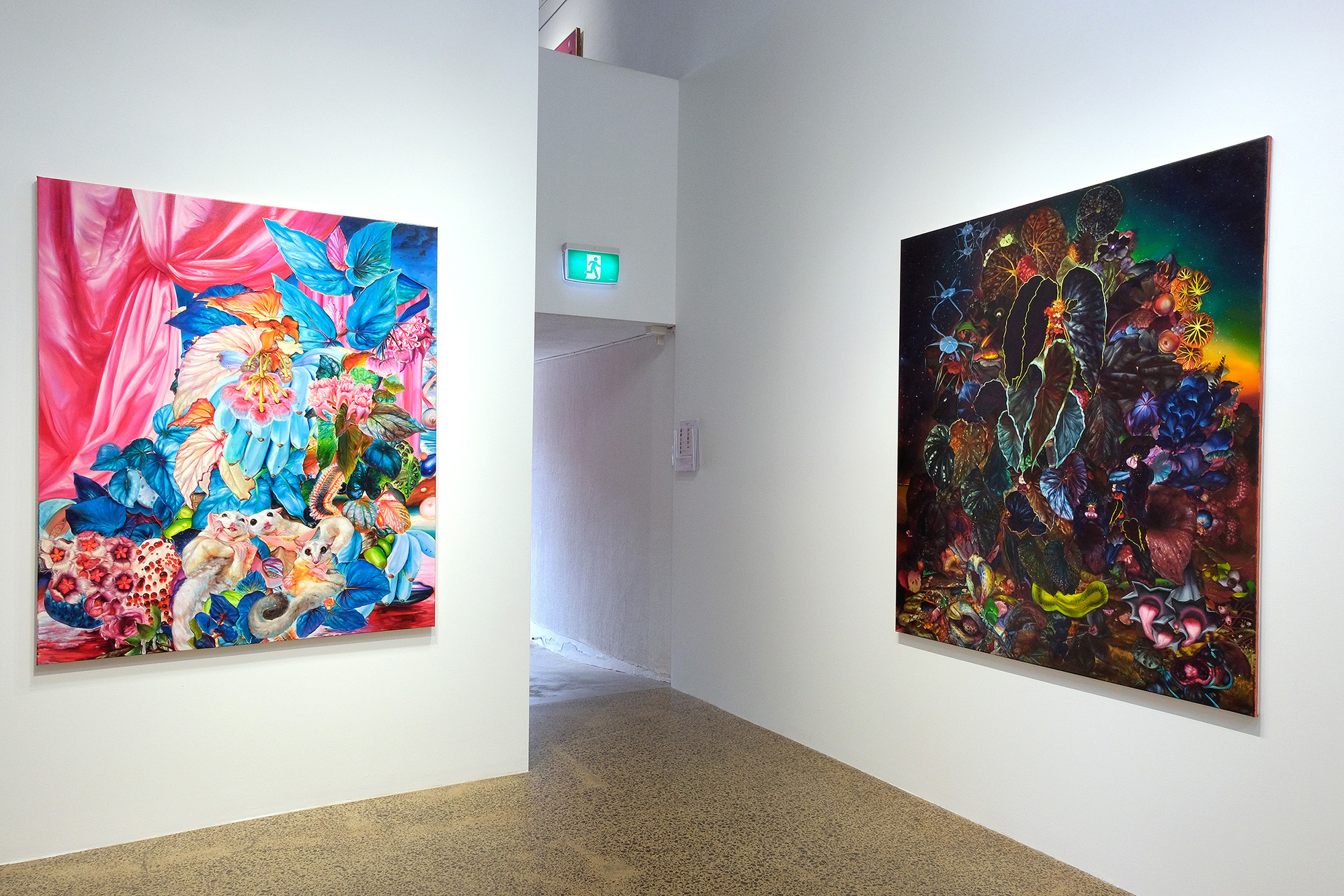
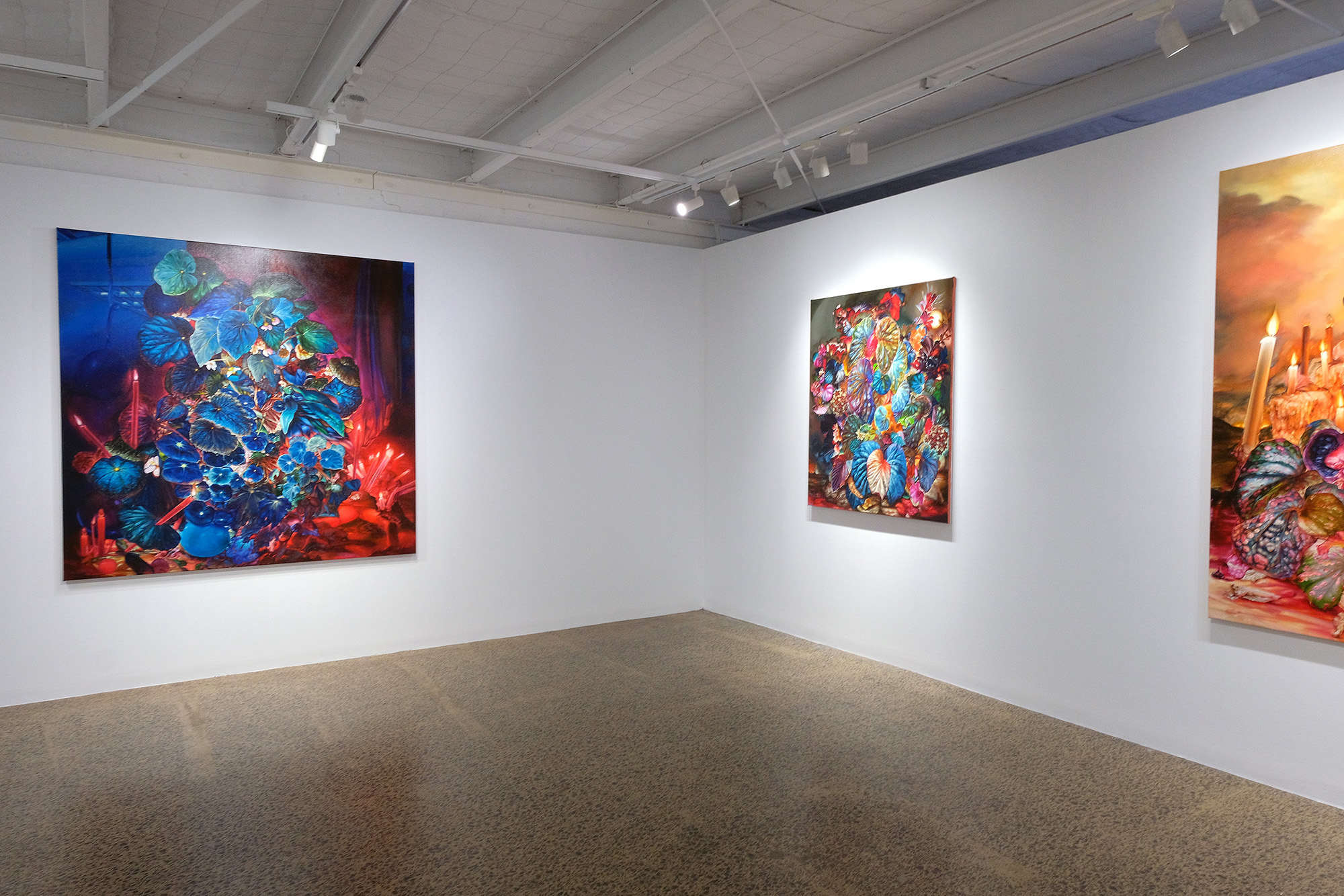
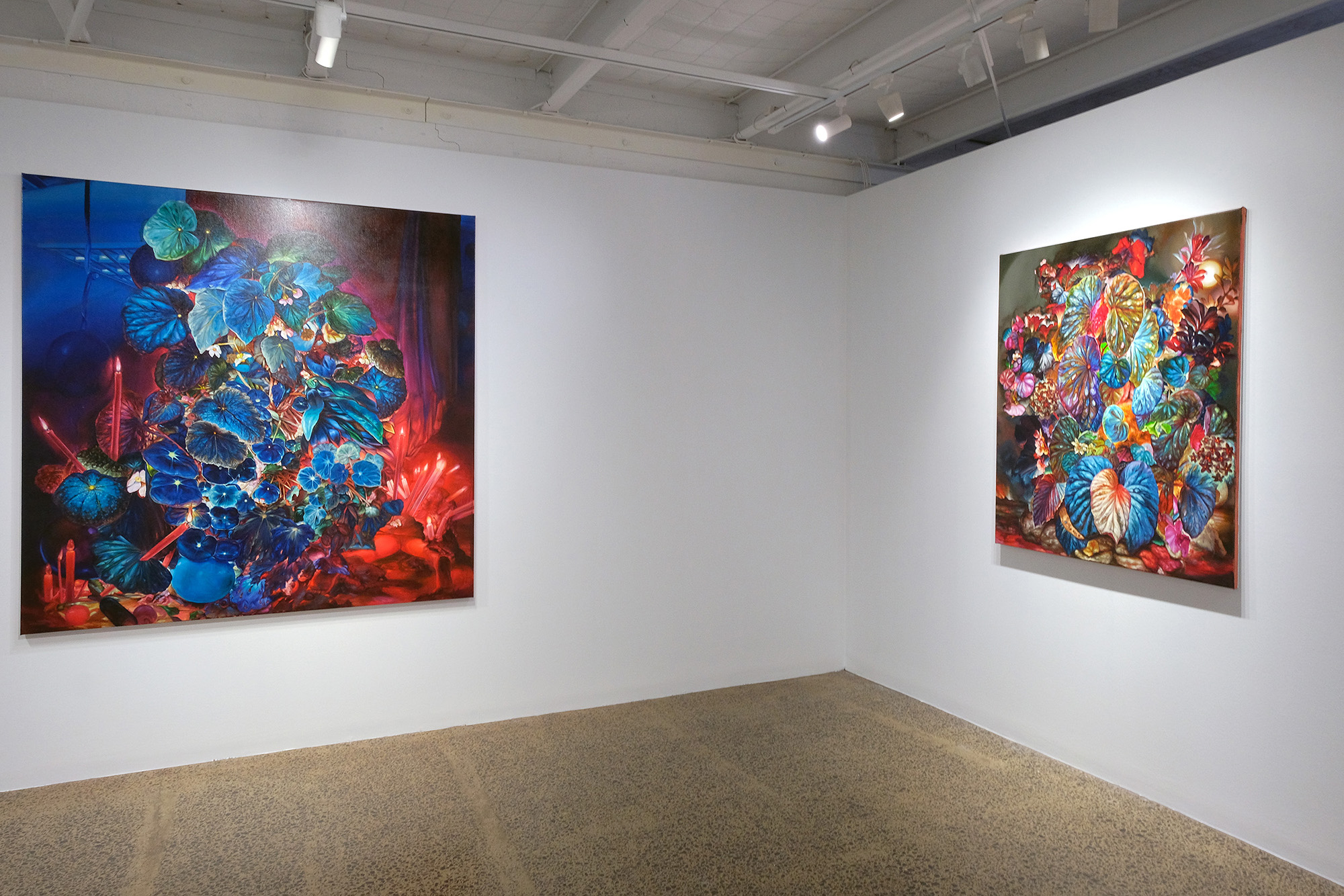
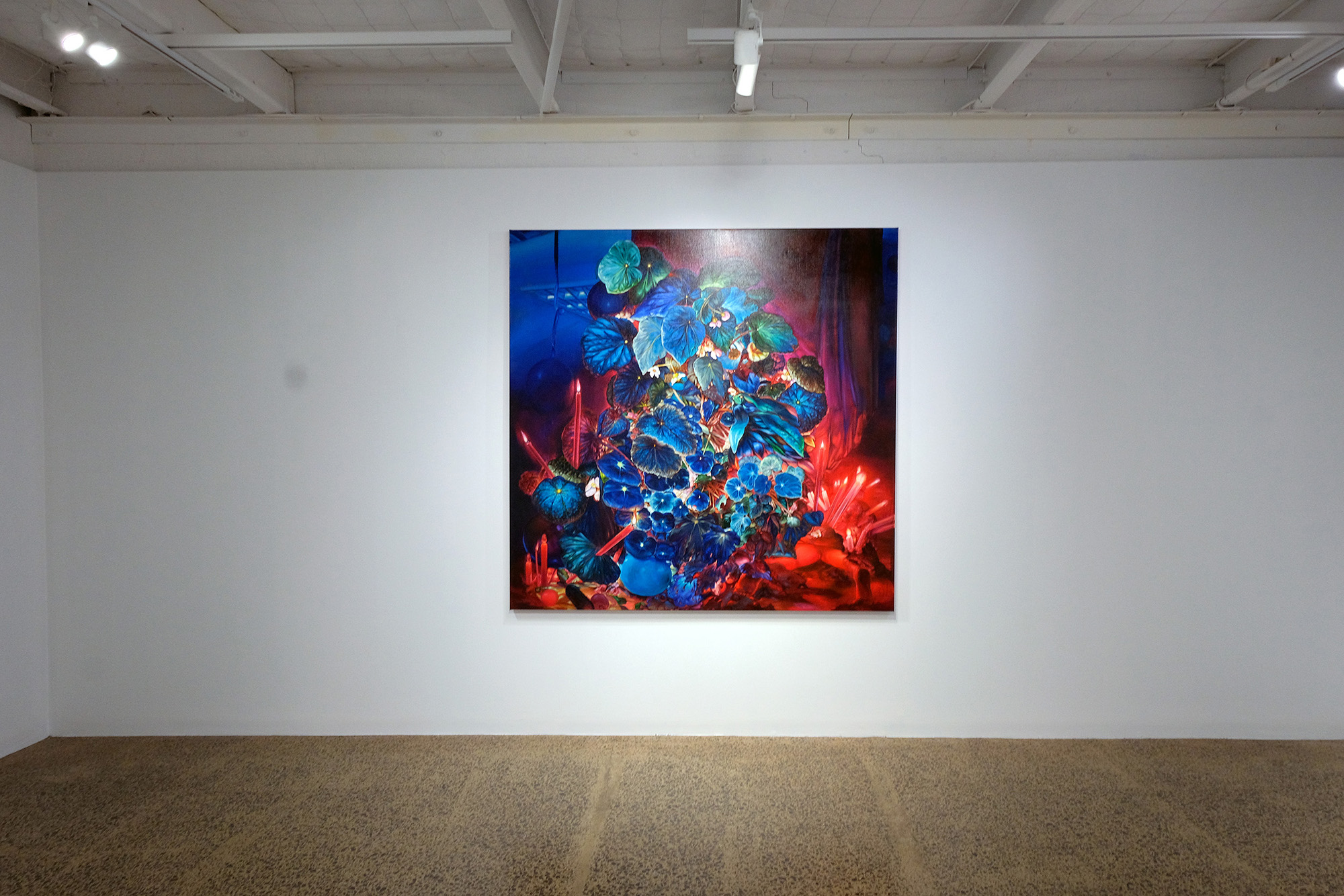
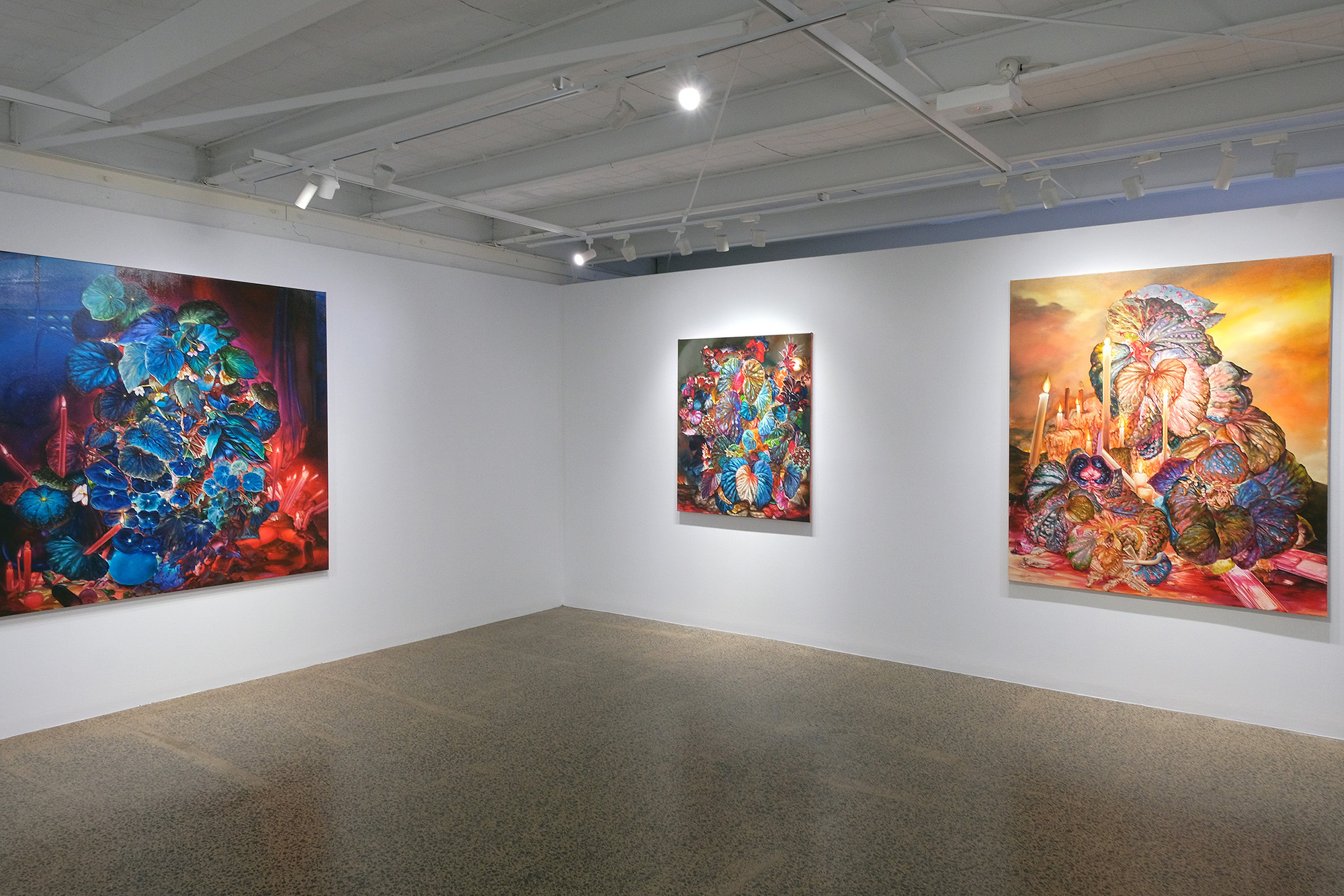
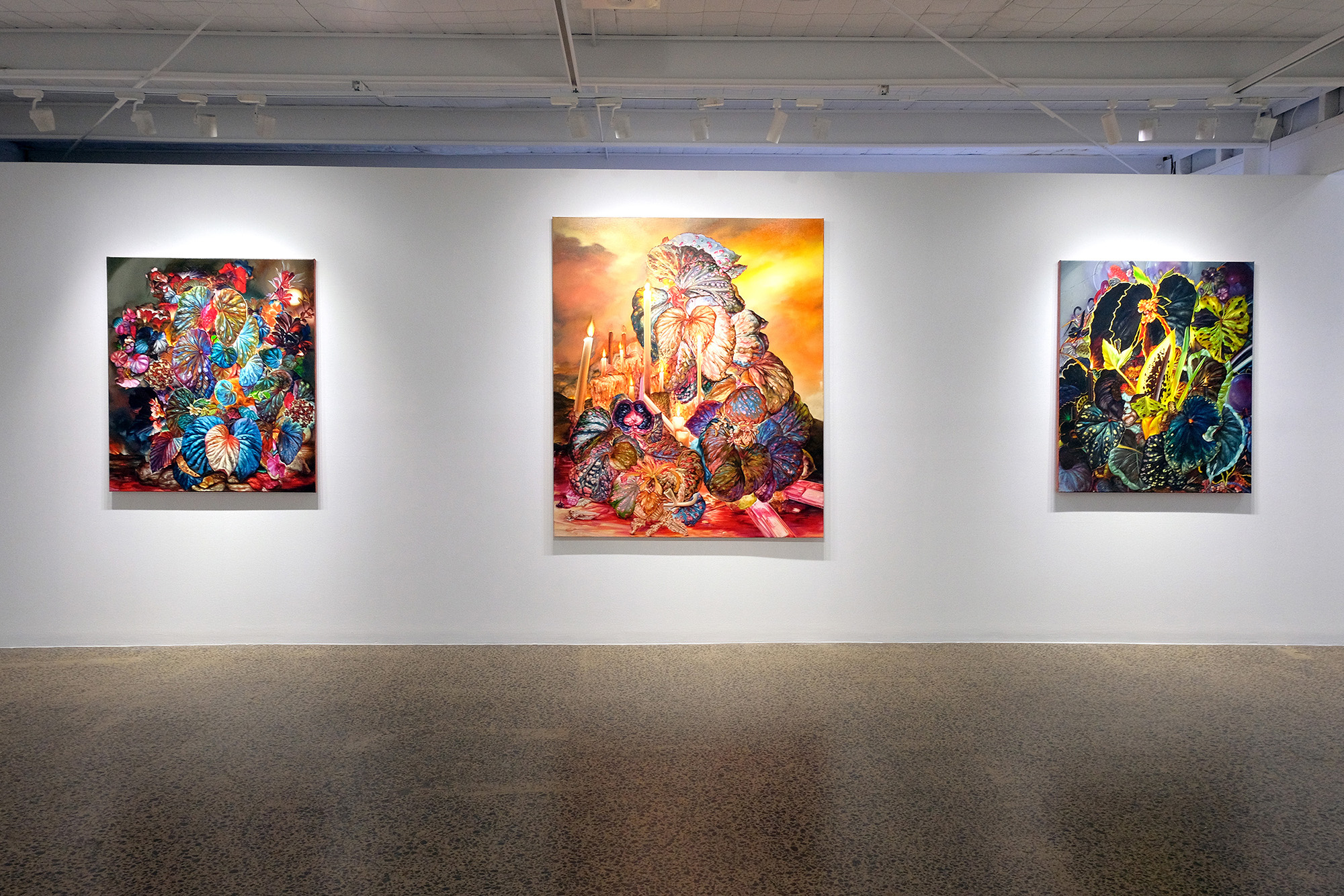
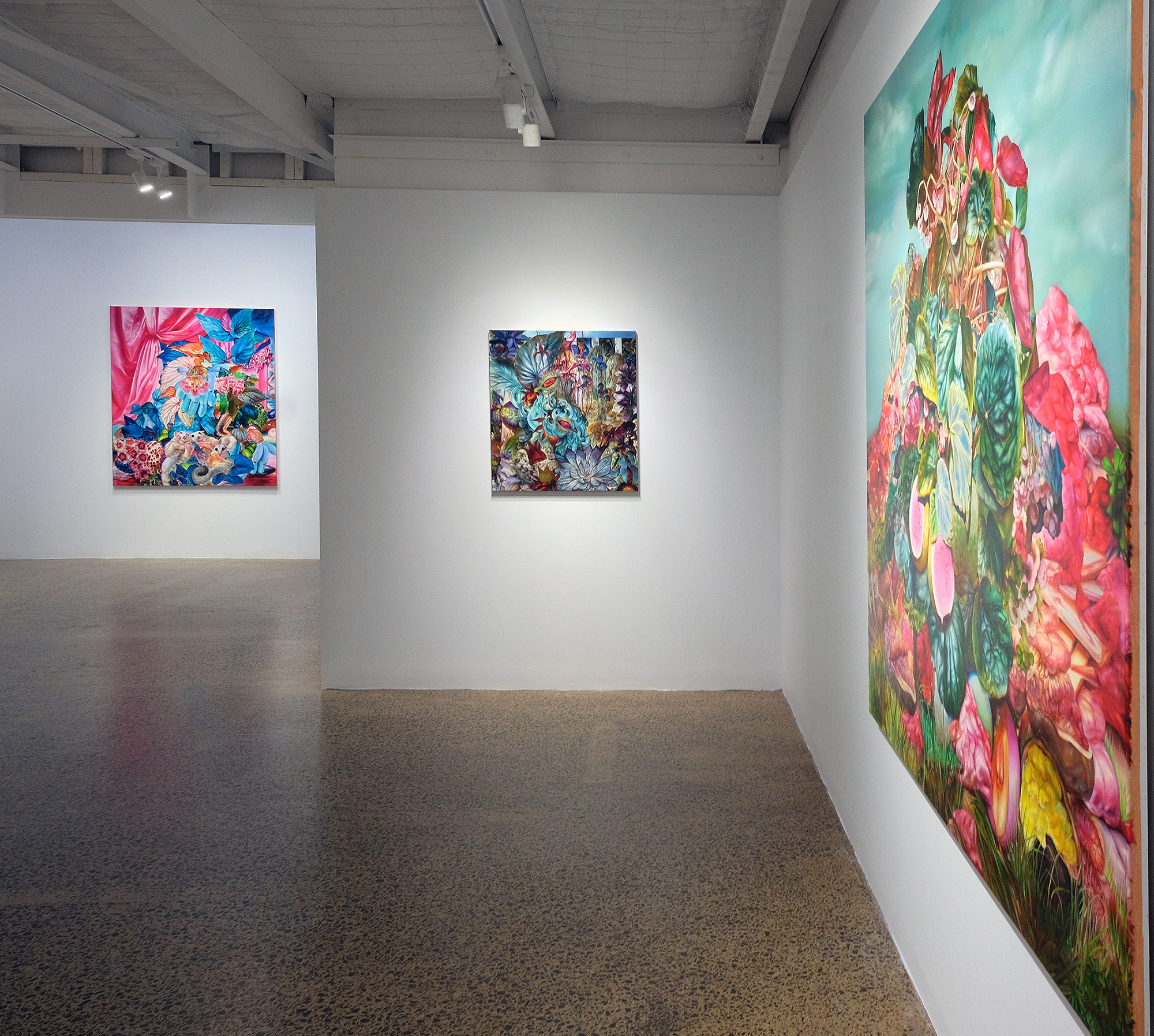
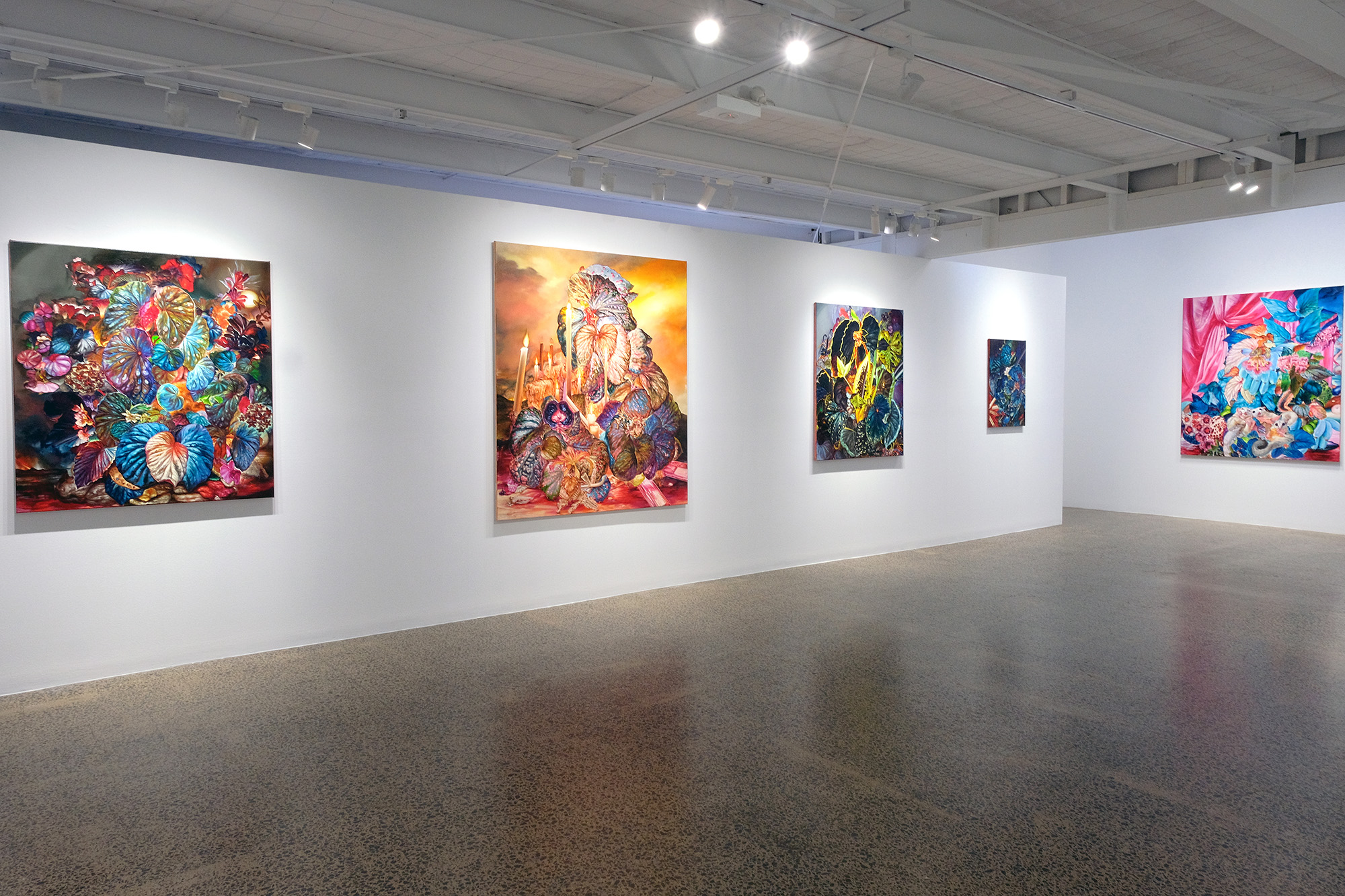
Shimmering Begonia leaves pile high—striated, variegated, polka-dotted, and waxed. Luxurians and Angel Wings stretch heavenward as an offering to the gods. A surreptitious bowerbird tirelessly adds to the Bacchanalian scene with evermore trinkets and fruit.
How much will be enough to appease them?
In an age of sensory overload, our screen-driven culture doles out bitesized treats and sugar-coated indulgences. Short-form videos, optimised for rapid consumption, roll across our retinas and soothe digital anxiety like worry beads. The dopamine rush of online outrage and disposable consumer trends offer the illusion of control in an increasingly untethered world—one where feelings of powerlessness and pessimism, born from politics’ failure to meet the crises of our time, often feel too expansive to confront.
When working class poverty deepens, middle-class prosperity wanes and the wealth of the top 1% surpasses that of the Gilded Age, attachments to small things count.
Add a “Labubu” to the pile. Too much is never enough.
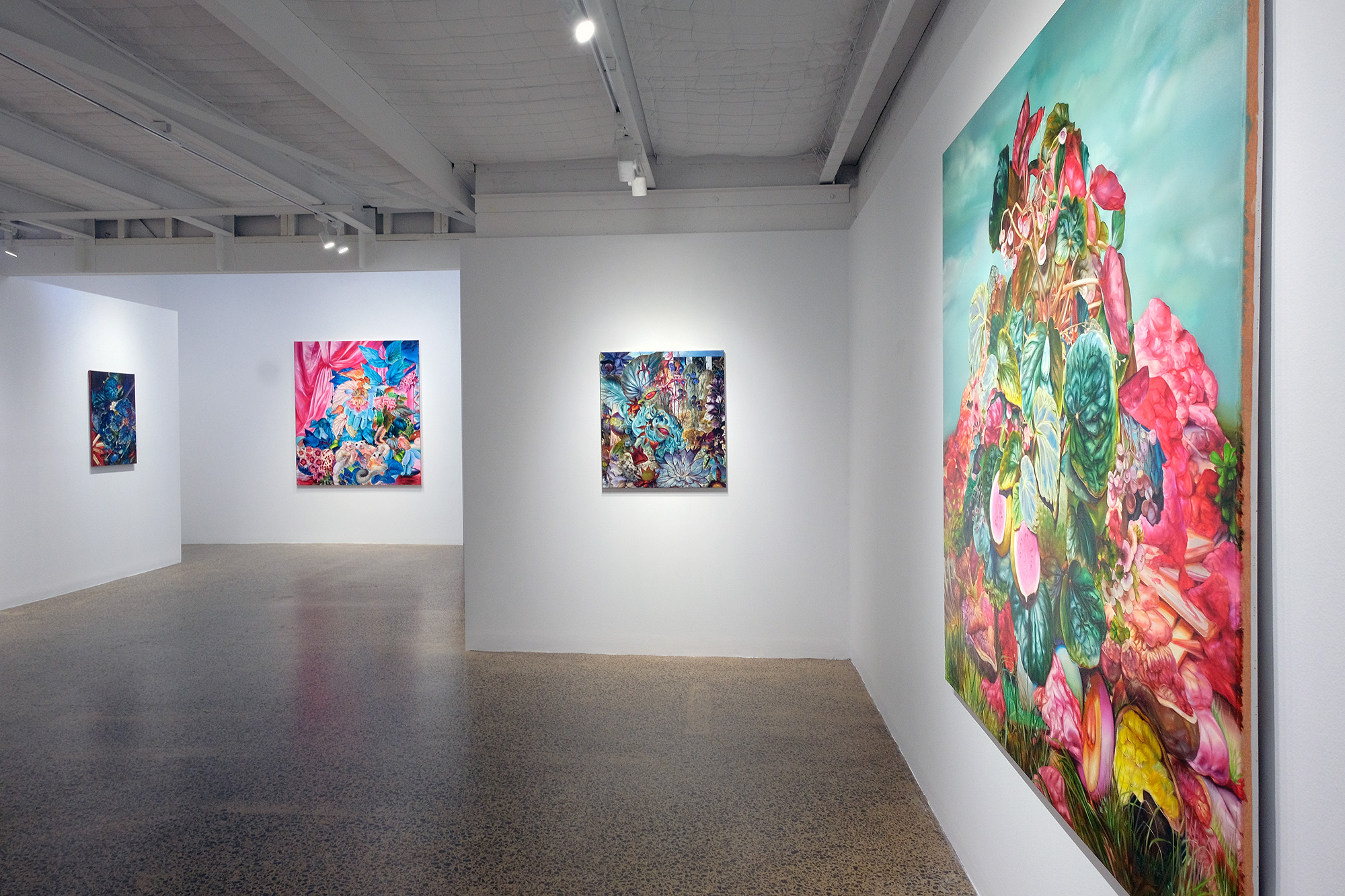
Combining centuries-old vanitas traditions and the aesthetics of Baroque art with the glitz of 1970s disco, Disco Inferno (2025, Nicholas Thompson Gallery) explores fleeting pleasures in a hypermediated, economically anxious age. Borrowing its title from The Trammps’ 1976 hit, the exhibition presents botanical arrangements poised in delicate tension, between surface and substance, desire and decay, delight and disillusionment.
In hyperreal, luxuriously maximalist scenes, flora and party paraphernalia are depicted in a neo-Rococo celebration of excess and revelry. Iridescent textures gleam like mirror balls; branches sway like dancers on the floor. But all that glitters is not gold.
The disco era offered joy and escape, particularly for marginalised communities, yet unfolded amid economic decline, political unrest, and social upheaval. The era bore the aftershocks of race riots, the Vietnam War, political assassinations, and the Watergate scandal, leaving many disillusioned and adrift. More than two centuries prior, the ornamental extravagance of the Rococo era masked a society on the brink of violent Revolution.
Against the backdrop of our own historical poly-crisis moment, Disco Inferno asks: How does one live meaningfully in the shadow of existential despair? Here, the exhibition title’s second meaning comes to the fore: in Latin, Disco Inferno translates to “I learn by suffering.”
For over a decade, Karla Marchesi’s practice has drawn from and reimagined the “Impossible Bouquet” genre of 17th-century Dutch still life painting. At the height of the tulip trade, secular merchants embraced this genre, in which blooms from every season appeared together in impossible abundance: a simulacrum of nature. Initially drawn to its symbolic capacity to represent market capitalism and Western worldviews, Marchesi has since developed the motif into a personal lexicon: One that entwines autobiographical narrative with broader ideological critique, utilising bathos, pathos, and the absence of the human figure to speak to both intimate and universal concerns.
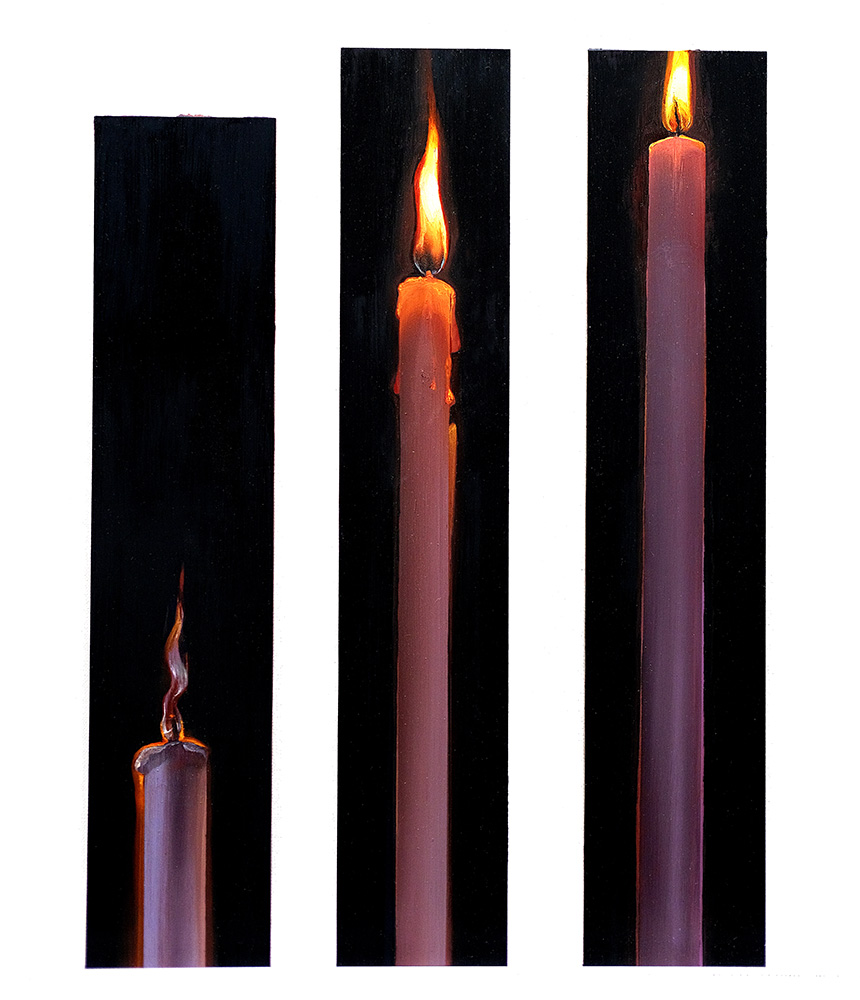
With an air of affirmative nihilism and tragicomic melodrama, Marchesi’s paintings depict complex entanglements of multigenus flora in hypernatural, posthumanist scenes. Positioned between seduction and repulsion, her botanical subjects operate as potent allegories—sensuous yet critical, underscoring the duality of human nature. Where vanitas still lifes once used cut flowers, burning candles, and bubbles to symbolise life’s fragility (or, here, party balloons), Marchesi’s forms pulse with vitality. They grow abundantly, emerging from lush piles and assume the role of anthropomorphic protagonists, brimming with agency and adaptive resilience. Wax candles share space with electric bulbs, signalling a path from transience towards endurance.
All may not be lost.
The party may be over, but traces of humanity’s prevailing capacity for hope and rebirth remain in its wake. Behold the begonias boogie as they dance the night away.